











Investing in the stock market can be rewarding, but it also requires a solid understanding of how stocks move. One of the key methods traders and investors use to predict stock price movements is technical analysis. Unlike fundamental analysis, which looks at a company’s financials and business model, technical analysis focuses on historical price and volume data to forecast future price movements.
If you are a beginner looking to understand how to do technical analysis of a stock, this guide will walk you through the key concepts, tools, and strategies you need to get started.
Table of Contents
What is Technical Analysis?
Technical analysis is a trading approach that involves studying past market data—primarily price and volume—to identify patterns and trends. It is based on the assumption that history tends to repeat itself, and by analysing historical price movements, traders can make informed decisions about future trends.
Technical analysts use charts, indicators, and various patterns to determine entry and exit points for trades. The goal is to capitalize on price movements and trends rather than relying on a company’s financial statements.
Key Principles of Technical Analysis
Price Discounts Everything: Technical analysis assumes that all known information about a stock (financials, news, macroeconomic trends) is already reflected in its price. This means that traders focus on price movements rather than external factors.
Prices Move in Trends: Stock prices tend to follow trends—whether upward (bullish), downward (bearish), or sideways (consolidation). Recognizing these trends early can help traders make profitable decisions.
History Repeats Itself: Market Patterns and behaviours repeat over time due to investor psychology. By studying past trends, traders can anticipate similar movements in the future.
Essential Tools for Technical Analysis
To conduct technical analysis effectively, you need to familiarize yourself with some important tools and concepts.
Stock Charts
Charts are the backbone of technical analysis. There are different types of charts, including:
- Line Chart: Shows the closing prices over a period.
- Bar Chart: Displays the open, high, low, and close (OHLC) prices of particular time frame.
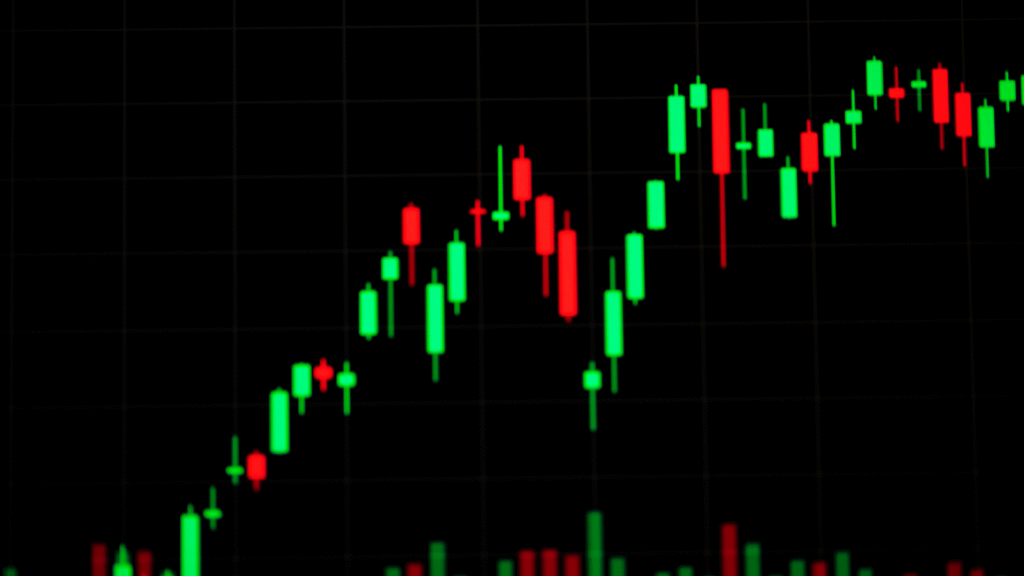
- Candlestick Chart: The most popular type, offering detailed price action insights.
Support and Resistance Levels
- Support: A price level where demand is strong enough to prevent the stock from falling further.
- Resistance: A price level where selling pressure prevents the stock from rising further or reversal from there.
- Support and Resistance levels help traders determine potential entry and exit points in particular situation.
Moving Averages (MA)
Moving averages helps to traders smooth out price data to identify trends. Popular types include:
- Simple Moving Average (SMA): Averages closing prices over a particular time period.
- Exponential Moving Average (EMA): Gives more weight to recent prices, making it more responsive to price changes in the chart.
Trend Lines
Trend lines are straight lines drawn on charts to identify the direction of a stock’s movement. An upward trend line connects higher lows and higher highs, while a downward trend line connects lower highs and lower highs.
Volume Analysis
Volume represents the number of shares traded in a selected time interval. High volume during a price movement confirms the strength of the trend, while low volume may indicate weakness.
Technical Indicators
Indicators help traders analyse price trends and market momentum. Some key ones include:
- Relative Strength Index (RSI): It measures whether a stock is overbought or oversold at a point.
- Moving Average Convergence Divergence (MACD): Identifies trend changes and momentum.
- Bollinger Bands: It helps to traders or investors to identify volatility and potential breakout points.
- Fibonacci Retracement: Uses mathematical ratios to find potential support and resistance levels.
Steps to Perform Technical Analysis
Step 1: Identify the Stock’s Trend: Use moving averages and trend lines to determine if the stock is in an uptrend, downtrend, or sideways trend.
Step 2: Analyse Support and Resistance Levels: Identify key price levels where the stock has historically reversed direction in past.
Step 3: Use Technical Indicators: Apply indicators like RSI and MACD to gauge momentum and potential reversals.
Step 4: Look for Chart Patterns: Recognize formations like head and shoulders, double tops/bottoms, and flags that indicate trend reversals or continuations.
Step 5: Confirm with Volume: Ensure that price movements are supported by high trading volume for a more reliable analysis.
Step 6: Set Entry and Exit Points: Based on your analysis, define clear entry (buy) and exit (sell) levels to manage risk effectively.
Common Mistakes to Avoid in Technical Analysis
- Ignoring Risk Management: Always use stop-loss orders to minimize potential losses.
- Overcomplicating Analysis: Too many indicators can create confusion. Stick to a few reliable ones.
- Trading Against the Trend: Always follow the trend instead of predicting reversals prematurely.
- Letting Emotions Drive Decisions: Avoid making impulsive trades in market based on fear or greed.
- Not Back testing Strategies: Before using a strategy, test it on past market data to see how well it performs.
Final Thought
Technical analysis is a powerful tool that can help traders make informed decisions in the stock market. By understanding price patterns, trends, and indicators, you can identify profitable trading opportunities and reduce risks. However, no strategy guarantees success—it’s crucial to combine technical analysis with proper risk management and continuous learning.
If you’re new to technical analysis, start by practicing with free charting tools available on platforms like Trading View, Investing.com, or your stock broker’s trading platform. The more you analyse, the better you will get at reading the markets
Disclaimer
The content on this platform is for informational and educational purposes only and should not be considered financial, investment, or legal advice. While we strive to provide accurate and up-to-date information, we do not guarantee the completeness, reliability, or suitability of the information provided.





Technical analysis is a powerful tool for understanding market trends and making informed trading decisions. By studying historical data and using charts, traders can identify patterns and predict future movements. Indicators and volume analysis provide additional insights into market behavior. It’s essential to master these tools to enhance your trading strategy. How can traders effectively combine different technical indicators for optimal results? Given the growing economic instability due to the events in the Middle East, many businesses are looking for guaranteed fast and secure payment solutions. Recently, I came across LiberSave (LS) — they promise instant bank transfers with no chargebacks or card verification. It says integration takes 5 minutes and is already being tested in Israel and the UAE. Has anyone actually checked how this works in crisis conditions?
Technical analysis is a powerful tool for traders to predict market movements by studying historical data. Charts, indicators, and patterns are essential for identifying trends and making informed decisions. Understanding tools like moving averages and trend lines can significantly improve trading strategies. Volume analysis also plays a crucial role in confirming the strength of a trend. How can one effectively combine these tools to maximize trading success? German news in Russian (новости Германии)— quirky, bold, and hypnotically captivating. Like a telegram from a parallel Europe. Care to take a peek?
[…] Master the Basics of Technical Analysis for Smarter Trading […]
gMplTtbegsTRFGRWIqPSGIct
Your article helped me a lot, is there any more related content? Thanks!
Your point of view caught my eye and was very interesting. Thanks. I have a question for you.
Thanks for sharing. I read many of your blog posts, cool, your blog is very good.